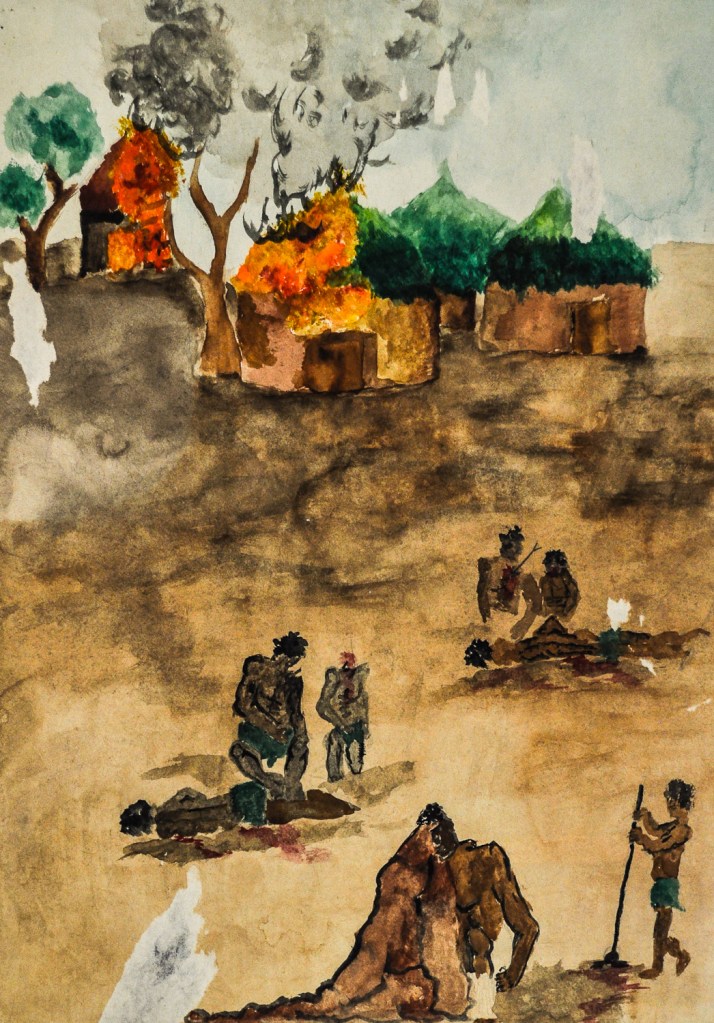
The Blood Wars continued. Casorians battled Whitehairs in the valleys, the mountains and frequently at the mouth of the Kanawha River, but never on the Southern Plains. The Whitehairs were resistance fighters, emptying the ranks of the mail-clad. Unexpected forays often raided the outskirts.
In the spring of the twentieth year, a plague entered Casoria, and there weren’t enough men to sweep the dead from the streets. Ranald sat in his council chambers and listened to his advisors. One faction believed the Gibbor had sent the plague and should be attacked; others wanted to wait out the plague and war in the fall. When an elderly gentleman rose from the back of the room, the clamoring stopped. Clad in somber black, silvered hair his only ornamentation, the Lord could have easily passed for a Casorian version of a Seer. He surveyed them all without speaking. Some held his gaze, others looked away as if he’d tapped into a hidden guilt. This elder was known to be a devout follower of Jah.
“Majesty, if I may,” Lord Alexy Fulcruchen rose with difficulty.
Ranald held out his scepter. “You may.”
“The Gibbor hasn’t sent the plague,” he said bluntly. “The Gibbor wouldn’t send the plague any more than he would force men to serve him. This is a war of ideas, not disease. I have met him and he is an honorable man.”
Ranald silenced the outcry before it began. He touched the top of his scepter, signaling Fulcruchen to continue.
“For those of you who’ve heard what I’m about to say, I apologize. It is an old story. There are no new twists.” His gnarled hands held to the back of his chair. “It was a bright day. We were young. I was new to Casoria and thought to curry favor with the King by encouraging him to pursue a small bird called the three-spotted falcon.
“I alone encouraged him,” he added, shaking his head. “In Bornea, we worship gods of our own choosing when we worship at all. The name of Jah meant nothing to me. I’d heard it perhaps a dozen times in my life and then coupled with cursing. I was ignorant of sikestra. I thought the fears of the other men silly and weak, and so I supported the King by emptying my head of every plausible myth I’d heard since childhood. The others were unwilling. Even the falconer tried, but Rand was . . . ” Fulcruchen paused, “rash. The obstacles only made the bird more desirable. We entered the forest and became lost in it. Anjhest was terrified. Then the Gibbor appeared. He asked us to leave, he begged us. I think it was Creath who called him a peasant. It might have been me.” Fulcruchen surveyed the assembly, the pain on his face plain for all to see. “It’ shouldn’t have come to this, all blood and gore and malice. It was simply a day’s outing to fetch a bird.” Fulcruchen looked at the Warrior King. “Let this be over. Majesty, I say go to the Gibbor and make peace.”

