Nonna followed him from her church, Hearth Baptist, to listen to Randy Phelps, the pop-up preacher, hammer women while building a group of like-minded men around himself. Nonna’s life might have gotten worse if the finance committee hadn’t decided to buy a second-hand bus for the youth. Lucky was outraged. He said the youth were spoiled enough, and the bus was junk. Hadn’t anyone heard the rod knock? It broke down in Webster County on the way to Camp Cowan and had to be towed nearly a hundred miles. The expense was more than the bus was worth. Lucky threw his tie in the trash and started watching Sunday Morning Football. Nonna went back to Hearth.
She’s been under his thumb right from the start. She got pregnant early on and was tired from the start. The promise of her house in town evaporated, but I don’t think she noticed. She was concentrated solely on Lillyanne. My son is eight months older than my niece, and when the two of them rented the apartment over the grocery, Nonna and I would stroll our babies around town. Then, Lucky bought acreage way out Kill Creek, and Nonna has been at the end of the world ever since. I still miss her.
My niece is a puzzle to me, as she’s a combination of both, and considering my brother and Nonna are so different, I expected Lilyanne to be one or the other. She loves her mother, but tends to disregard her, and though she’d probably lay down her life for Lucky (and he for her), they can’t be in the same room together without one of them stomping out.
Right now, Lilyanne is trying hard not to look bored during our adult conversation, but she’s curled her toes under the seat of her chair.
“I’m not calling you a liar, Susie,” says Nonna, as she swipes at the ever-present stain, “but I can’t see people paying good money for old stuff.”
“It’s not old stuff,” I explain. “They call it Appalachian crafts. You have to go and see for yourself. The woman who sold that awful quilt made three hundred dollars.” The deeper I go, the more inspired I get. “You know what else she told me?”
“You talked to her?” asks Nonna, her eyes wide.
“It wasn’t exactly a conversation, Nonna. It was after the couple who’d bought it walked off. She started laughing and I asked her what she was laughing about.” My story feels solid beneath me, and the woman’s name pops in my mind: Eloise.
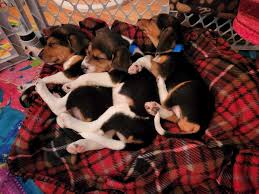
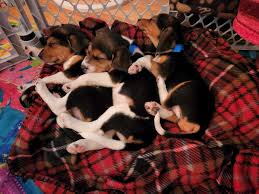
“Eloise told me — I did ask her name, otherwise it would have been impolite.” Nonna nods and I continue. “Her youngest boy’s beagle bitch whelped on it. Ten pups.”
Nonna is so dumbfounded she stops her scrubbing and stands in what I call her ten after six pose. She adopted this pose after she lost her right eye tooth. To disguise the gap, she developed a habit of putting her hand to her face while she talks out of the side of her mouth. She tilts her head slightly to the right, where the minute hand of the clock would be, and that’s why I think as I do. I don’t know why Nonna doesn’t have a bridge made; Lucky works for the railroad and has good insurance.
“Ten pups?” Her hand flutters away, then back again.
Ten was the place to stop. Any more would have made the story unbelievable.
“Three hundred dollars is a lot of money, Momma,” says Lilyanne quietly.
“She’s right,” I add, feeling pride rise inside me. Lilyanne is smarter than my brother. People smart. She hasn’t blurted out everything the way Lucky would do, believing his voice to be the one worth listening to. “You’ve got to come and see for yourself.”
We next embark on a stare-down. Nonna is the first to look away. She reaches under the sink for a can of aerosol cleaner and begins spraying down the tops of the cannisters. As if it mattered. A fly wouldn’t land on them, even the one containing sugar. The entire house is this way, so clean and shining that one never knows where to step. When we visit, Jim and I wipe our shoes on the floor mats in the car, then on the mat outside the door, then on the rug inside the door. Sometimes, we take off our shoes.
When the kids were small, we used to come out every weekend for Sunday dinner. Now that Sean is a teenager, our lives are different. He’s always got something to do on the weekends and I don’t like to be gone while he’s doing it, but when Lucky phoned this past Wednesday, I was eager to come. It seemed like an age since I’d seen Nonna, and once acclimated to the house, I found it relaxing, like visiting my grandmother’s before she passed.
Nonna has always reminded me of an older person, one of those shy, silent women with pale skin who kept to her house and family two generations ago. She is an anachronism with all her graces stripped away. Lucky hasn’t noticed; he just knows that for the last eighteen years, he hasn’t had to turn a hand.
I look at Nonna and see unhappiness staring me in the face. I watch as she rinses the sink, which she’s done twice, and realize that in addition to unhappiness, there might be something physically wrong. She’s favored her left side all day. Not only that, but in the way she carries herself — in the small of her back, the protection of her breasts, the expression in her eyes when she thinks no one is watching. Something is wrong. Something female, private and sad.
“Are you all right?” I ask.
Nonna turns off the faucet and stares at me. I read caution in her eyes. “What do you mean?”
“What I said. You look sick.”
Actually, she reminds me of a photo I saw of Georgia clay-eaters long ago, people so starved they ate dirt to get minerals from the soil. Yet, Nonna’s problem is not one of intake, but outflow, as though the salt she craves comes from the tears in her eyes.
Before she can answer, the phone rings in the den.

