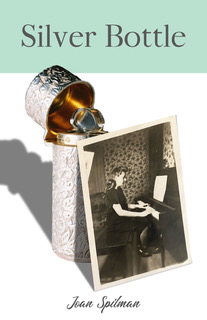
Mother was still far from expert on the organ. The man from Kinzey Music had given the twelve lessons and left, assuring her that, though she was a little heavy on the pedals, she’d catch on. It would be better if she played barefoot, with not even nylons on. Her feet wouldn’t slip. She was out of the house now, but only to practice.
Every day after school, I’d traipse behind my mother as she went to Glorious Life Pentecostal. At first it was a trial, then a fascination. I sat in the choir loft and watched her face, imagining that same intensity in Grandma Lizzie when she learned to drive. Grandma watched the boys, and there was a tacit agreement between us that I’d watch Mother.
Then, I was out of school. Grandma Lizzie took the boys earlier, and Mother and I went to the church right after breakfast. I’d eat two bowls of Fruit Loops while Grandma fussed about Mother’s lack of appetite. My mother—still at home, back at the bench, raising her kids. But though the arguments between them had stopped (at least when I was in the house), Mother had developed a sullen streak. If Grandma Lizzie fussed at her to eat, she’d dump her food into the scrap dish we saved for Chum. The only thing I saw her “eat” that summer was black coffee
Once Mother was at the organ, she forgot about everything, which freed me. I’d grown bored with sitting in the choir loft, so I moved down to the pews, taking along an Etch-a-Sketch to keep myself amused. When that bored me, I made up games of my own. I’d slide up and down the pews, seeing how far I could go with just one shove.
In front of the pulpit was a huge communion table of solid oak; across the front in large letters were carved the words: THIS DOETH IN REMEMBRANCE OF ME. I’d position myself in front of the first M, hook back with my right foot, and give myself a shove (it was cheating to use my hands). The wood was so smoothly polished that Mother never suspected. (Now, I realize she wouldn’t have cared.) When I got tired of sliding, I’d search the hymnbooks for notes left by the older girls, or faintly pencil in a mustache on the Sunbeam girl on the paper fans donated by the Sunbeam Bread Company and the Veach Funeral Home.
My grandmother hated those fans. Even when the church was stifling and those cheeks were blooming roses, she wouldn’t fan herself, while the other women waved them as if they were racing for air. I asked her why, and all she’d say was, “I think they’re tacky.”
It must have been the Veach name on the back, because the Sunbeam girl was harmless: a child of perhaps five, blonde hair piled on top of her head, each tumbled ringlet meticulously etched. Her skin glowed pink with health and innocence, and her head was bowed in prayer. The background was a blue sky washed fresh by rain with a couple of fluffy clouds thrown in, which, if I squinted hard, reminded me of cows. Her eyelashes were long and curled upwards, her mouth pursed in a pink bow. The lettering on the back of the fan said: COMPLIMENTS OF THE SUNBEAM BREAD COMPANY AND VEACH FUNERAL HOME. ALWAYS READY TO SERVE YOU.
Sometimes, I slept.
My naps came to an abrupt halt, one day, when I awoke to the sound of awful music. Not that Mother was playing badly, but she was singing in a voice I’d never heard, her head thrown back so far that I could see the tip of her nose. There was a wildness in her voice, a vibrato that overrode the rest. The words to the hymn went like this:
Lord Jesus, I want to be perfectly whole
I want thee forever to live in my soul.
Cast out every idol, break down every foe,
Now wash me and I will be whiter than snow.
I’d heard that hymn before, had even sung it. Simple words, a repetitive chorus, nothing to be afraid of, but Mother was making the familiar terrible and new. Coming out of sleep, I struggled to recognize the wild woman on the organ bench.
Whiter than snow, yes, whiter than snow,
Now wash me and I will be whiter than snow.
By the time she was ready to go to the second verse, I was screaming loud enough to wake the dead. I put my hands over my ears and wailed until I became aware that Mother was shaking me, hard.
We stared at each other.
“What the matter with you? Are you sick?” She picked me up, felt me all over. “Do you hurt somewhere?”
“It’s the music.” Her kindness only made me want to cry more. “I’m afraid of the music.”

